

Subscribe and receive email notifications of new blog posts.
 RSS Feed
2
Bend's Four Quadrants: A Strategic Neighborhood Comparison
Bend's Four Quadrants: A Strategic Neighborhood Comparison
Quick-Answer Callout: Bend's four quadrants—Northwest, Northeast, Southeast, and Southwest—each carry a distinct lifestyle profile, price band, and buyer fit. Strategic relocators use the quadrant framework to filter the city before drilling into specific neighborhoods. Choose NW for premium outdoor access, NE for affordability and healthcare proximity, SE for acreage and a quieter pace, or SW for riverfront access and resort-style living.
Why Bend's Four Quadrants Matter More Than Specific Neighborhoods
When relocating buyers ask about moving to Bend, the conversation usually starts at the neighborhood level: NorthWest Crossing, Tetherow, Awbrey Butte, Old Bend, or the Old Mill District. Each name carries an immediate reputation and significant price implications.
However, that search moves faster and lands cleaner when it starts at the quadrant level. Bend's geography divides into four roughly equal quadrants split by Highway 97 running north-south, and Reed Market Road and Greenwood Avenue running east-west. Each quadrant possesses its own unique character, real estate price band, and distinct buyer fit.
Northwest Bend: Outdoor Access, Premium Pricing
Northwest Bend includes premier communities like Awbrey Butte, Summit West, River West, NorthWest Crossing, and Old Bend. The defining quality of this quadrant is immediate outdoor access combined with close proximity to downtown.
NW residents enjoy rapid reach to the Phil's Trail mountain bike network, Shevlin Park, the Deschutes River Trail, and Mount Bachelor (located just 22 miles southwest).
- Pricing: NW carries the city's highest real estate premium. Awbrey Butte homes commonly sit in the high six figures to low seven figures. NorthWest Crossing offers a mix ranging from townhomes in the high $500,00s to single-family properties well above $1 million.
- Best buyer fit: Outdoor-oriented relocators, retirees with active outdoor priorities, and buyers willing to pay a premium for proximity to downtown and immediate trail access.
- Trade-offs: NW carries the highest entry pricing in Bend. Buyers prioritizing maximum lot size per dollar will find better financial math in other quadrants.

Northeast Bend: Affordability, Healthcare Proximity, Investor Interest
Northeast Bend includes neighborhoods like Boyd Acres, Mountain View, and the Orchard District. The defining quality of this quadrant is affordability relative to the rest of the city, paired with exceptional proximity to St. Charles Medical Center.
NE has historically been the most accessible Bend quadrant. Median home prices here typically run 15 to 25 percent below their NW comparables.
- Best buyer fit: Buyers with healthcare-proximity priorities, investors seeking strong rental yield, and relocators prioritizing overall budget over premium resort amenities. Many retirement buyers choose NE specifically for quick, reliable healthcare access.
- Trade-offs: NE does not deliver the immediate wilderness trail access of NW or the direct riverfront environments found in SW Bend.
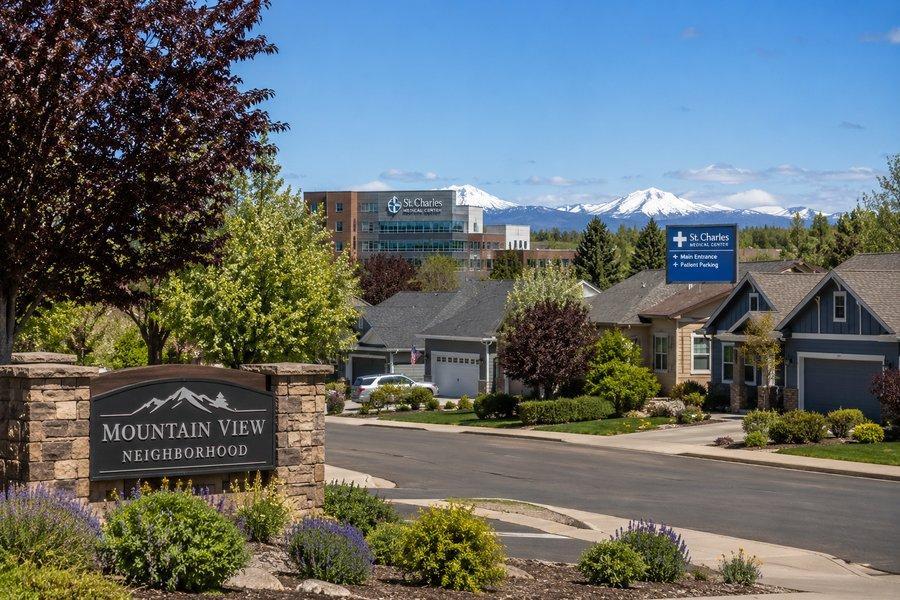
Southeast Bend: Acreage, Quieter Pace, Larger Lots
Southeast Bend includes expansive neighborhoods like Larkspur, the Old Farm District, and the broader SE rural areas. The defining quality of this quadrant is space.
SE retains some of the largest remaining lot sizes inside city limits. Many properties carry valuable irrigation rights inherited from the area's rich agricultural history. The daily pace is quieter, the rhythm is slower, and the commute to downtown is longer than it is from NW.
- Best buyer fit: Buyers who want true acreage, hobby-farm capacity, or a quieter, more private pace of life while remaining inside city limits.
- Trade-offs: SE buyers commute to downtown rather than walk. Buyers prioritizing extreme urban walkability will score this quadrant low. However, close-in SE neighborhoods are growing rapidly, and new city bikeability projects are underway to expand commuting options.

Southwest Bend: Riverfront, New Construction, Resort Living
Southwest Bend includes highly desirable areas such as Century West, Southern Crossing, and the Tetherow resort community. The defining qualities of this quadrant are the Deschutes River, luxury new construction, and resort-style living.
- Pricing: Tetherow townhomes typically run from $700,000 to over $1 million. Standard SW neighborhoods generally range between $550,000 and $850,000.
- Best buyer fit: Buyers wanting newer construction without paying the historical premiums of the NW quadrant. It is also an excellent fit for resort-style retirees scoring Tetherow highest, and right-sizers wanting maintenance-managed townhome living within a community structure.
- Trade-offs: SW lacks the historic, old-growth architectural character found in Old Bend.
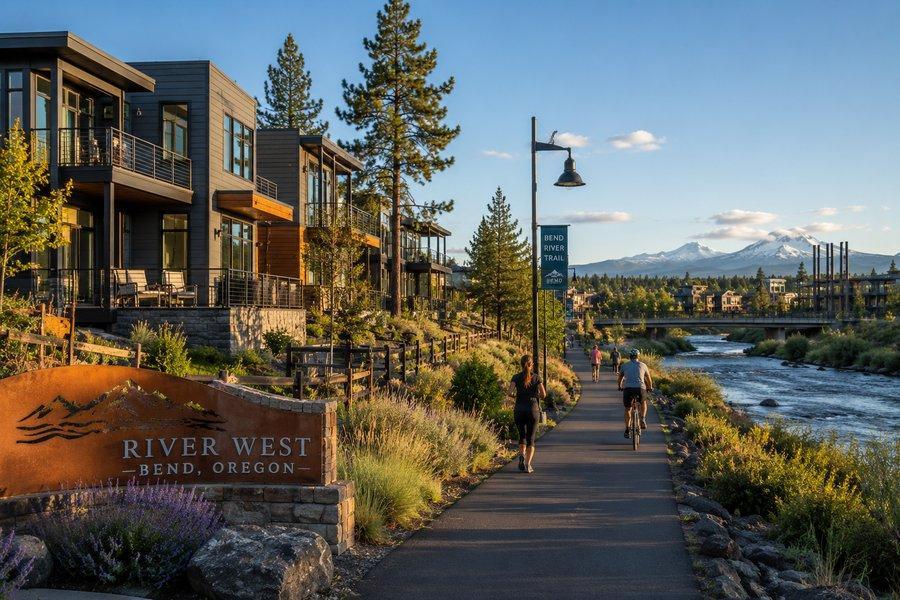
How to Use the Quadrant Framework
The quadrant framework is an efficiency filter, not a final decision. To use it strategically, follow this three-step process:
- Step One: Take your Lifestyle Alignment Scorecard and apply it at the quadrant level first. Score each quadrant on your top lifestyle priorities. The one or two quadrants that score highest become your immediate geographical shortlist.
- Step Two: Drill into specific neighborhoods within those shortlisted quadrants. For example, NW splits into very different neighborhood micro-markets (Awbrey Butte versus Old Bend versus NorthWest Crossing).
- Step Three: Tour your top two or three neighborhood candidates in person, score the visit on your scorecard, and make your final decision with confidence.
What Most Quadrant-Level Comparisons Miss
The View-Lot Premium
Every quadrant has stunning "view lots," and every quadrant has standard interior lots. The view-lot premium can easily run 15 to 30 percent above a comparable interior lot price within the exact same neighborhood block.
The Snow Removal Pattern
Snow accumulation and removal vary significantly across quadrants. NW Bend gets more snow on average than NE Bend due to elevation changes. Additionally, some neighborhoods feature HOA-managed plowing while others rely entirely on the city. This is a critical detail at age 70 with a January morning doctor's appointment.
The Commute Inversion
Out-of-state buyers frequently underestimate commute logistics inside Bend. While the city is geographically compact, the drive from far SE Bend to a downtown coffee shop or a NW medical center is meaningfully longer and features more traffic checkpoints than the drive from NW or SW.
Frequently Asked Questions
Which Bend quadrant has the best schools?
The Bend-La Pine School District covers all four quadrants, with school assignments based on specific attendance boundaries rather than quadrant lines. Strategic buyers should research the specific schools serving their exact candidate addresses.
Which quadrant has the lowest property taxes?
Property tax rates are relatively uniform across Bend. The total tax bill correlates directly with the property's assessed value rather than its quadrant location. However, NE's lower average home prices naturally produce lower total tax bills than NW or SW.
Are any of these quadrants better for resale value?
NW historically appreciates the fastest, though it requires the highest entry price. NE has shown highly resilient appreciation in recent years as buyers priced out of the West side shifted their search eastward.
Which quadrant fits an active retiree best?
It depends entirely on your personalized scorecard. Active retirees with heavy outdoor priorities tend to score NW or SW highest. Active retirees prioritizing close proximity to top-tier medical facilities often score NE higher, while retirees wanting privacy and room to breathe lean toward SE.
How do I evaluate these quadrants remotely?
Utilize driving maps, neighborhood-specific video tours, hyper-local environmental data, and a dedicated buyer agent who can run customized video walkthroughs. Combined with the Lifestyle Alignment Scorecard, remote quadrant evaluation produces a highly accurate shortlist before you ever board a plane.
When You're Ready to Apply the Framework
The quadrant framework provides your strategic frame, and the Lifestyle Alignment Scorecard is the tool that scores it. The Strategic Relocation Blueprint puts both into a clear, predictable sequence.
Reach out directly when you are ready to filter Bend at the quadrant level: Email lsnider@authenticus.us or call 503-592-4323.
Privacy Policy / DMCA Notice / ADA Accessibility


